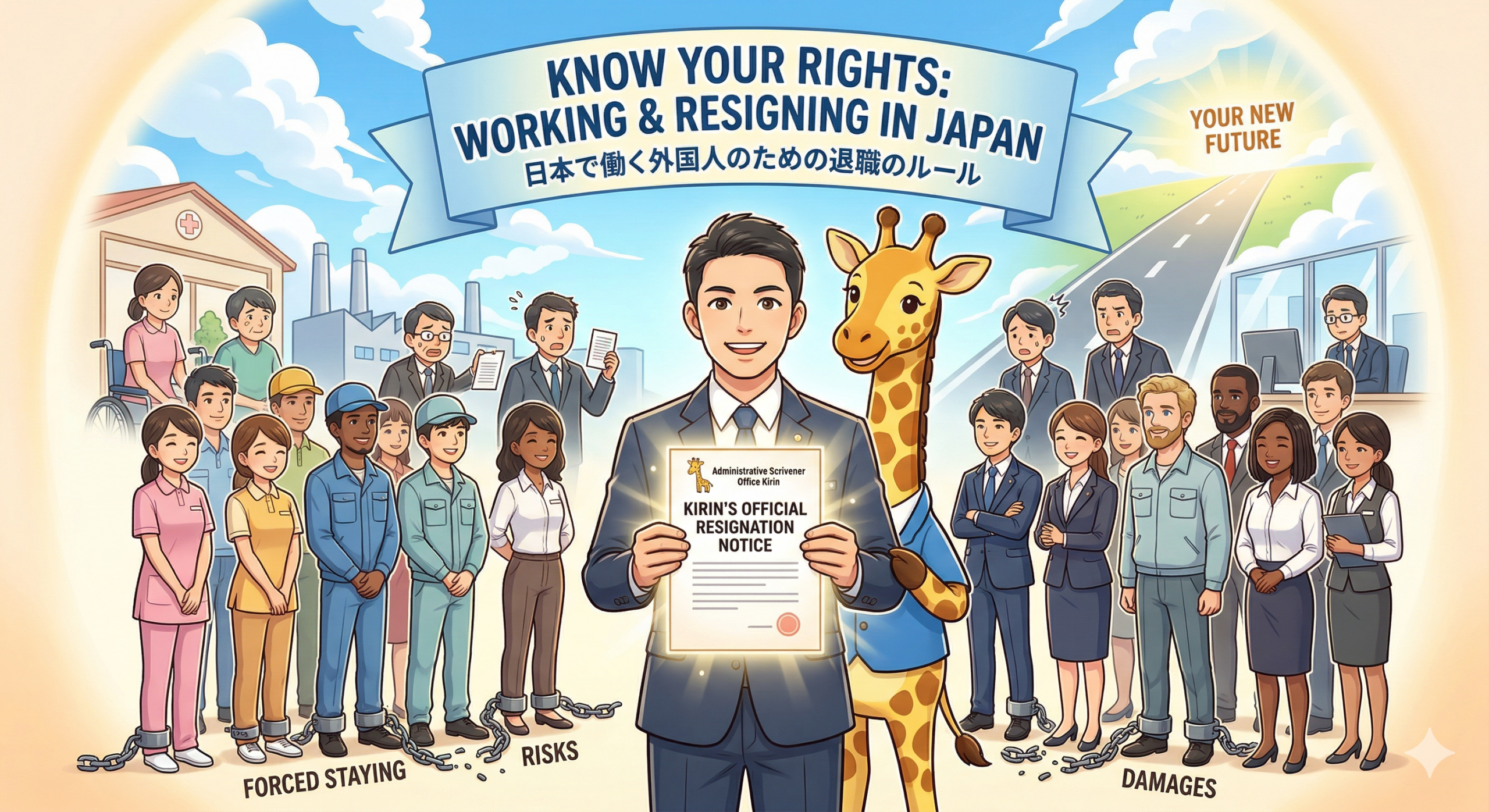
Many foreign workers in Japan often consult us saying, “My company told me I absolutely cannot quit because my contract hasn’t finished yet.”
In reality, Japanese law clearly distinguishes between “cases where you can quit” and “cases where you need to be careful” based on the content and situation of your contract.
As Administrative Scrivener Office Kirin, we will explain the correct legal knowledge to ensure you do not get into trouble.
1. The General Rule for Those with a “1-Year Employment Contract”
If you have signed a contract with a fixed term (e.g., a 1-year contract), the general rule is that the worker is bound by the contract for that period.
- Unless there are “unavoidable circumstances” (such as illness), you are theoretically not permitted to quit at your own convenience during the term.
- Since a contract is a “binding promise,” forcing a resignation without a justifiable reason carries significant legal risks.
2. The Risk of “Damages” You Should Know
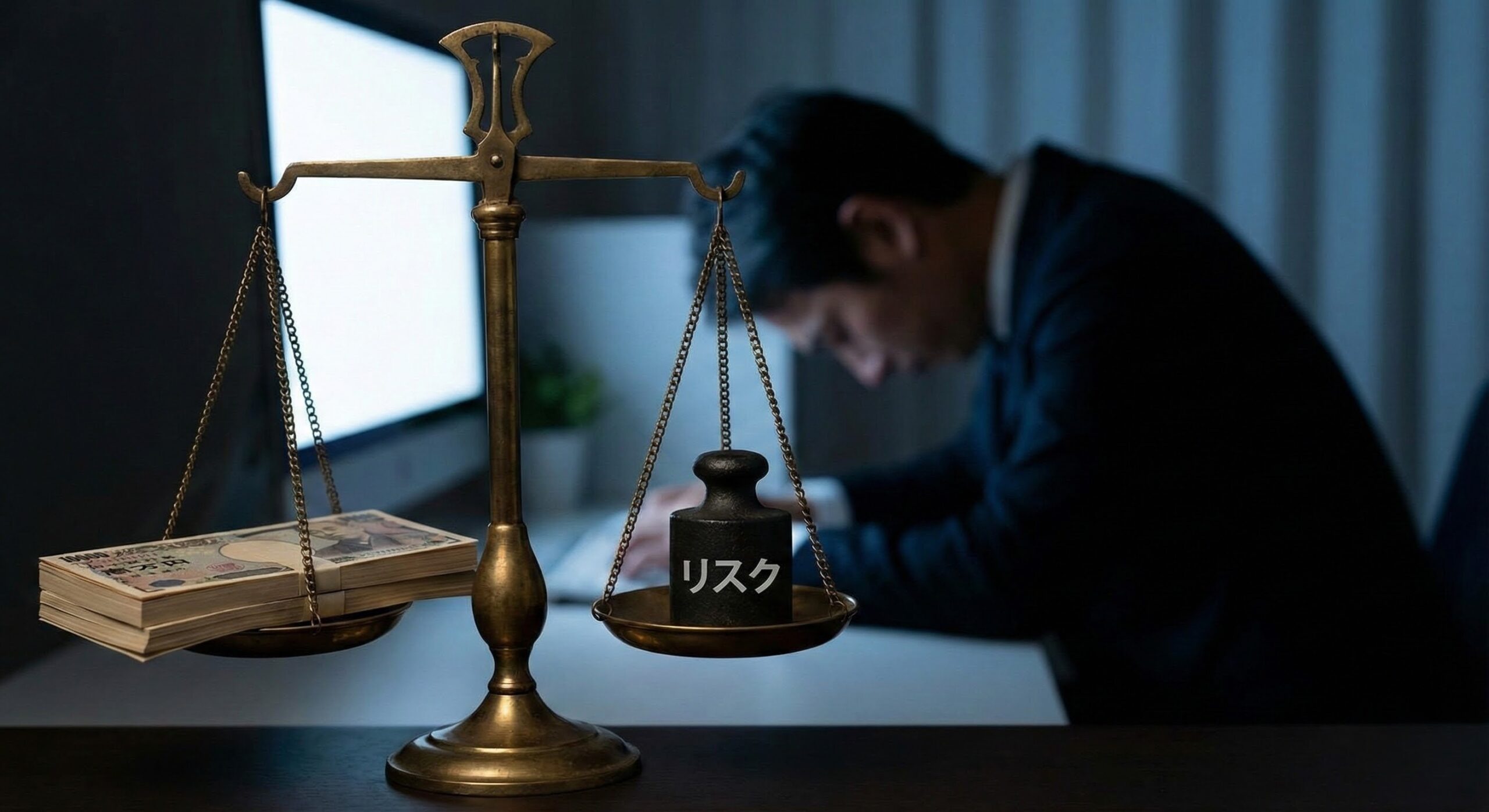
If you force a resignation without “unavoidable circumstances,” the company may claim damages (a request for you to pay money) against you.
- This claim would be based on “non-performance of contract (breach of contract)” for the actual losses the company suffered because you quit suddenly.
- It is important to remember that you may be held liable for damages that have a “legally sufficient cause” resulting from the failure to provide labor before a proper resignation.
3. Four Cases Where Resignation IS Legally Permitted
You might wonder, “Does that mean I can never quit?” Not at all. Resignation is legally permitted in the following four cases:
- Case 1: Indefinite-term Employment Contracts (Contracts with no end date) If your contract does not specify an end date, you can resign at any time. In principle, your resignation becomes effective 2 weeks after you notify the company of your intent to quit, even without the company’s permission.
- Case 2: When the Company Fails to Keep Its Promises (Labor Standards Act, Article 15, Para 2) If the actual working conditions or job duties differ from what was promised at the time of hiring, the worker can terminate the contract “immediately.” In this case, since the fault lies with the company, you do not need to fear claims for damages.
- Case 3: Contracts Longer than 1 Year, After Working for at Least 1 Year (Labor Standards Act, Article 137) Even if you have a long-term contract (e.g., a 3-year contract), you can resign at any time after completing the first year of work.
- Case 4: When You Are in the 2nd Year (or later) of a Renewed Contract If you have finished your initial 1-year contract and are now working in a renewed second year (meaning you have worked at the same workplace for over a year in total), the hurdle for resignation is significantly lower.
Administrative Scrivener Office Kirin will be your “Shield”
Deciding for yourself that “this is a breach of contract” takes courage, and you may fear the company threatening you with “claims for damages.”
As an Administrative Scrivener, I will check your contract and create a document that objectively proves the fact that the company has failed to keep its promises.
- Official Notification Based on Facts: By using the professional authority of an Administrative Scrivener to notify the company of your resignation based on legal grounds, we can prevent unjust claims and protect you.
- Support for a Safe Resignation: Instead of a forced or reckless departure, we help you take the “correct legal steps” to move forward toward your new path.
Before you try to force a resignation and suffer alone, please consult a professional first.
Representative Administrative Scrivener: Ryuichi Otsuka (With the integrity cultivated from 15 years in the JSDF and the expertise of an Administrative Scrivener, I will protect your rights.)
Official Support & Inquiries
Certified Administrative Scrivener Office Kirin
- Official Website: https://office-kirin.com/
- Facebook Page: Visit our Facebook Page